Why a villa demands different cladding
A standard residential building is a product of repetition and efficiency. A villa is an individual project with custom architectural detailing. A villa facade often includes complex corners, deep window reveals, material combinations, and personalized detailing not seen in residential buildings.
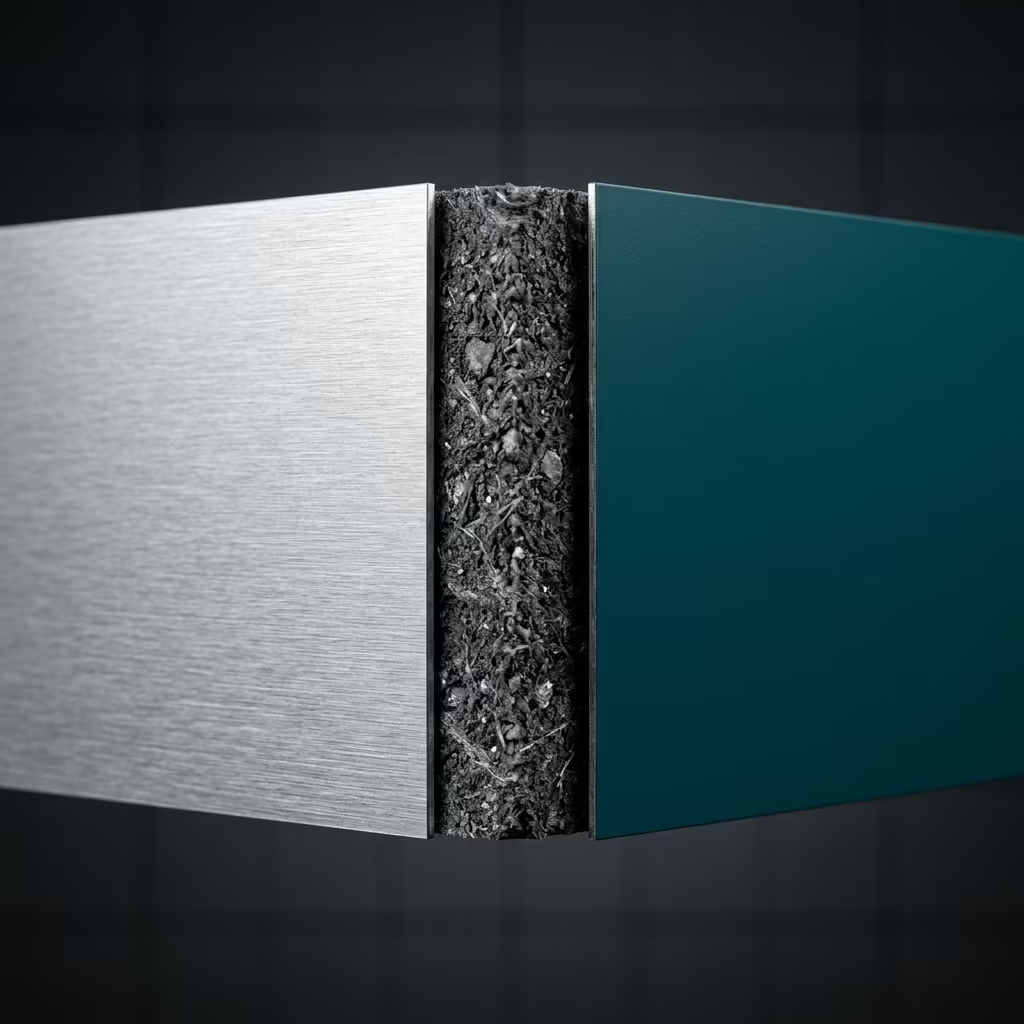
The result: a villa cladding system needs high design flexibility, the ability to handle non-standard geometries, and aesthetic durability over time. The accepted standard in luxury Israeli villas today is a combination of Alucobond with stone, or Alucobond with composite wood.
Popular design styles in Israel
There are three main styles dominant in the Israeli villa market. Each suits a different client type and architectural setting.
- Modern minimalist: facade primarily Alucobond in one or two colors, sharp corners, large windows. Clean, quality, fashionable
- Classic luxury: combination of Jerusalem stone with metallic or platinum Alucobond. Traditional with modern touches
- Eclectic natural: composite wood with earth-tone Alucobond. Suits villas in nature areas, connects to surroundings
Material selection: what works for a villa
Alucobond is the practical choice for the large sections of the facade: hundreds of colours and finishes, 25 years of service life, and the ability to handle complex geometry. The price is a project-specific figure with FR panels and a project-specific figure with A2 panels, including material, labour and a rear ventilated facade system, before VAT.
Natural stone is excellent for luxury facades if budget allows. Jerusalem stone, Zamra stone or Egyptian stone give a traditional look. It costs a project-specific figure including the supporting structure. Composite wood (WPC) is a popular modern alternative for anyone who wants the warmth of timber without the maintenance.
Combining materials on one facade
The architecturally best villa is sometimes one combining 2 or 3 materials on the facade. A successful combination is based on a zoning principle: one material for the main facade, a second for the entry area, a third for a small accent (one wall, window opening).
A successful example: main facade in platinum-grey Alucobond, entry wall in large Jerusalem stone panels, window reveals in dark composite wood. This combination blends modernity with warmth and luxury. All these materials have long lifespans, low maintenance, and the result looks valuable for 25 years.
Planning with the architect
Villa facade planning is always done together with the architect. At early design stage, the architect specifies material types in spec columns. But actual technical decisions (which exact color, which installation system, which manufacturer) are finalized with the executing contractor.
DAR GROUP works directly with the architect and the homeowner. We present physical color samples in actual site sunlight, explain technical alternatives, and help reach a decision balancing architectural vision with long-term maintenance horizon. This pre-installation conversation saves problems later.
How much maintenance does a villa facade need?
Maintenance on a quality villa facade is minimal. Washing with water twice a year, after winter and at the end of summer, is enough for most facades. On coastal villas, four washes a year are recommended to remove salt deposits before they attack the metal details.
Localised repairs are rare. If a panel is damaged by an impact or a falling branch, a single panel can be replaced without touching the rest of the facade. We keep spare panels from the same batch for every project so the colour still matches years later.
What sets the price
We do not publish price bands, because the number changes from project to project. These are the factors that move it most:
- Facade geometry. The number of openings, corners and folds per m². A large flat elevation costs far less per m² than a detailed one.
- Substrate condition. On an existing building this is the hardest item to judge remotely, and the one that surprises people in cheap quotations.
- Access equipment. Standard scaffolding, a suspended platform or rope access. At height this is a significant line of its own.
- Panel grade and finish. Fire-retardant or mineral core, and a standard finish versus metallic, wood-effect or a custom RAL colour.
- Project size. A larger area lowers the cost per m² through repetition and installation efficiency.
A binding quotation follows a discovery call and a site visit, in writing and itemised line by line. Book a site visit.
Key takeaways
- Cost: a project-specific figure. A villa with 350 m² of facade: a project-specific figure before VAT.
- Installation: 6 to 9 weeks on an average villa. No need to move out.
- Maintenance: wash twice a year, four times a year on the coast.
- The best result is usually a combination: Alucobond on the main facade, stone or WPC as an accent.
- Even where regulation does not require it, specify an FR core on a villa. Never PE.
Further reading: private villa facade cladding, choosing villa facade colours and finishes, and the Alucobond finishes gallery.
Frequently asked questions
Does cladding suit a home with exposed corners and complex geometry?
Alucobond is exactly suited for this. Panels are CNC-cut to millimeter precision, enabling sharp corners without visible seams. Complex geometry, angled cuts, and custom detailing are trivial technical problems when working with the right contractor. The most complex villas are executed with full precision.
Does cladding affect home valuation?
Significantly. Real estate appraisers note quality cladding as a positive criterion raising valuation. A villa with Alucobond facade receives 7 to 12 percent higher valuation than a similar villa with plaster, because the appraiser values the low rate of facade wear and high aesthetic image.
How long does villa cladding installation take?
Depends on size. An average villa with 350 to 500 sqm of facade takes 6 to 9 weeks. A large villa (700 sqm or more) takes 10 to 14 weeks. Time includes scaffolding, cladding, opening details, and finishes. Villa owners usually live in the home during the work since all work is performed externally.
Does cladding protect against external noise?
A rear ventilated facade system with mineral insulation (rock wool) provides significantly improved acoustic insulation. External noise reduction of 10 to 15 decibels is typical. In a villa adjacent to a traffic road, the difference is very noticeable. In a villa on a quiet street, the benefit is less prominent but still present.